
REVIEW · MAURITIUS
ROUTE OF INDIAN SPIRITUALITY
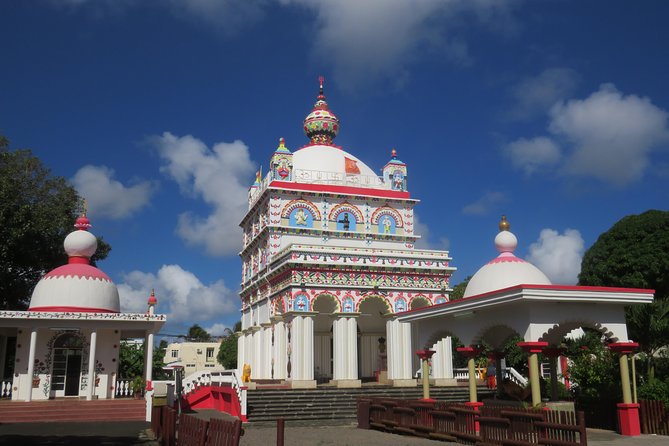
Temple myths, in plain language. This 3-hour private route in Mauritius pairs three emblematic stops with festival questions and Mauritian context, starting at Temple de Triolet and finishing at Cap Malheureux’s Muruga landmark sights. You get a playful approach that stays respectful, not touristy, while still making the symbols easy to understand.
I especially like how the tour connects everyday temple details to the big spiritual ideas people practice, like what certain rituals mean and why certain myths are told. I also like the human guide factor, since Eric’s explanations are praised for being both thorough and grounded in regional history.
One possible drawback: this experience depends on good weather, so if conditions are poor, your timing may shift or you may need to choose another date.
In This Review
- Key things to notice before you go
- What this tour really is, and why it fits Mauritius
- Start point at La Croisette MU, and how the timing plays out
- Stop 1, Temple de Triolet: Maha Shivaratree since 1898
- What I’d pay attention to
- A small consideration
- Stop 2, Cap Malheureux kovil: Tamil myths you can hold onto
- Why this stop matters
- The potential downside
- Stop 3, Cap Malheureux again: Muruga and the 15-meter statue connection
- What you’ll learn from the Muruga moment
- One practical note
- The festival questions that turn temples into stories
- If you want extra value, plan around festival dates
- How Mauritian history and slavery show up in modern faith
- What you gain as a visitor
- Private tour value: why about $64.61 feels fair
- Who should book this, and who should think twice
- Should you book this route of Indian spirituality?
- FAQ
- Where does the tour start?
- What time does the tour begin?
- How long is the experience?
- How much does it cost?
- Is this a private tour or shared group?
- Is the ticket mobile?
- Are admission fees included for the temples?
- What if it rains or I need to cancel?
Key things to notice before you go
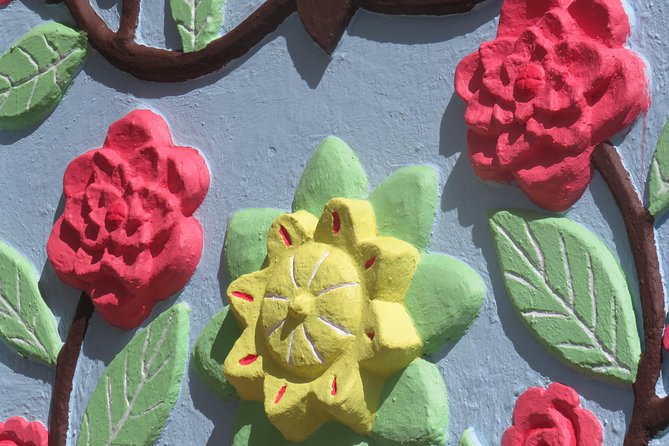
- Temple de Triolet’s Maha Shivaratree link back to the first pilgrimage in 1898, which sets the tone for the whole route
- Two Cap Malheureux Tamil temple stops, with myths, legends, and specific deities explained in a practical way
- A 15-meter Muruga statue in Cap Malheureux, including its connection to the Batu Caves replica design
- Festival-driven storytelling, where you’ll hear questions like why a deity is depicted with a blue neck or why the lingam is watered
- A short, focused format (about 3 hours) that works well if you want meaning, not an all-day schedule
Still weighing it up? These are the other Mauritius trips that came out well when we reviewed them.
What this tour really is, and why it fits Mauritius
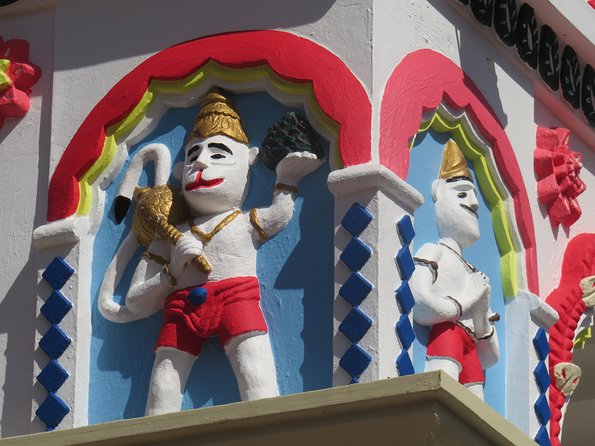
This is not a checklist of temple photos. It’s a guided route designed to help you read the symbols and understand why Mauritian Hindus keep practicing them today.
You’ll move between three sites that represent major threads of Indian spirituality on the island: Shaivite devotion linked to Maha Shivaratree, Tamil temple tradition through kovils, and the ongoing place of festivals in social life. The pacing is short enough that you won’t feel lost in a long schedule, but structured enough that each stop builds on the last.
Start point at La Croisette MU, and how the timing plays out
Your morning begins at La Croisette MU, Chem. Vingt Pieds, Grand Baie 30517, Mauritius, with a stated start time of 9:00 am. The experience runs about 3 hours, and the temples themselves add up to less than that, so expect some guided talk and walking time between stops.
Because it’s private, you won’t be trying to hear over strangers. You can also ask questions on the spot, which matters for a tour like this, where the meaning behind small details is the whole point.
If you prefer public transit, this tour is described as near public transportation, which is handy for getting to the start area. And if you travel with a service animal, service animals are allowed.
Stop 1, Temple de Triolet: Maha Shivaratree since 1898
The first stop is Temple de Triolet, and it’s chosen for a reason. You’re told it was the starting point of the first Maha Shivaratree pilgrimage in 1898, which gives you a timeline anchor before the myths start flying.
Expect about an hour here, with free admission at the temple. The tour frames Maha Shivaratree not just as a calendar date, but as a practice tied to devotion, discipline, and community. You’ll also hear the kinds of explanation temple symbolism deserves, including questions like why Shiva is shown with a blue neck.
What I’d pay attention to
Look for how the guide links story to ritual. When someone explains why lingam traditions include constant watering, you start to understand that these acts are meant to express continuity, not only decoration. In a short 3-hour window, this first stop is where you want to get your questions answered.
- Mauritius: Exclusive South West Tour★ 4.8 · 523 reviews
- Port Louis: Street Food & City Tour★ 4.7 · 518 reviews
- Mauritius North: Private Paradise Tour with Gardens, Markets★ 4.8 · 446 reviews
- Port Louis: Street Food & City Tour★ 4.9 · 377 reviews
- Port-Louis Street Food Tour★ 5.0 · 264 reviews
A small consideration
This part may feel more conceptual if you’re hoping for lots of sightseeing beyond the temple itself. The focus is meaning, not wide views.
Stop 2, Cap Malheureux kovil: Tamil myths you can hold onto
After Triolet, you head to Cap Malheureux for the second segment. Here you visit a first Tamil temple, described as a kovil, in the north of Mauritius.
This stop is shorter, about 30 minutes, but the tour is designed to make those minutes count through descriptions, history, and legends. The value is that you’re not just seeing a different style of Hindu worship. You’re learning how Tamil temple tradition forms a distinct thread within the larger Indian spiritual landscape in Mauritius.
Why this stop matters
Tamil spirituality shows up in Mauritius as something lived, not museum material. When a guide explains myths and legends here, it helps you notice patterns you might otherwise miss, like how certain stories teach identity, memory, and values inside a community.
If you care about the difference between a Hindu religion label and a Tamil cultural lens, this is the moment where that question becomes real. The tour explicitly raises that theme, including whether people are culturally distant or closer than they think.
The potential downside
Because the time is brief, you’ll have to follow the guide’s lead rather than wander too far on your own. If you like slow roaming and long photo sessions, you might feel slightly rushed.
Stop 3, Cap Malheureux again: Muruga and the 15-meter statue connection
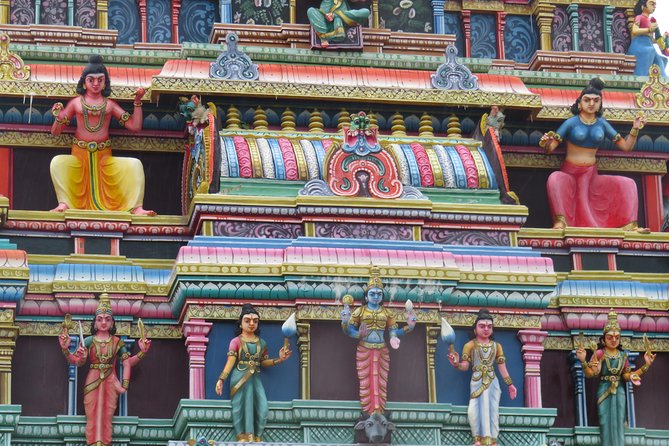
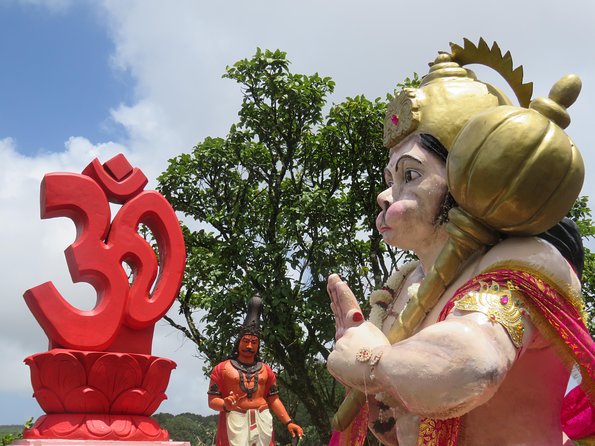
You return to Cap Malheureux for a second Tamil temple stop. This one is built around the imposing statue of the god Muruga, said to be 15 meters high.
The tour highlights it as a replica of the statue at the entrance of the Batu Caves in Kuala Lumpur. Expect around 15 minutes here, again with free admission.
What you’ll learn from the Muruga moment
Muruga is not random here. The guide uses this stop to anchor the Tamil religious world in a specific, recognizable deity presence. The replica connection matters too, because it shows how religious symbolism travels and adapts, yet remains recognizable across oceans.
Even in a short visit, this is the kind of stop that gives your brain a visual hook. Later, when you hear festival names like Cavadee or Govinden, the Muruga link helps those words stop being abstract.
One practical note
Fifteen minutes is short. If you want photos, aim to pick a spot early and settle in. Otherwise you’ll spend the whole time deciding.
The festival questions that turn temples into stories
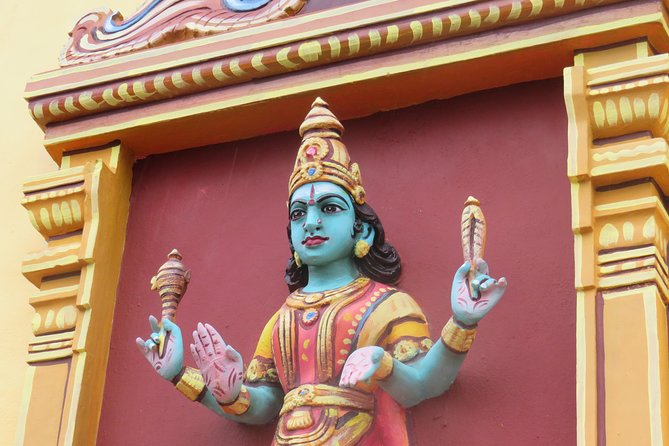
The route’s heart is the set of recurring questions the guide brings up. These are not random trivia. They’re the kinds of explanations you need if you want to understand why people do what they do, especially during big festival moments.
You’ll hear festival names such as Maha Shivaratree, Cavadee, Ganesh Chaturti, Ganga Snan, and Govinden. The tour also asks key cultural questions, including what people are celebrating and whether the differences you hear are about Hindu religion in general, Tamil religion specifically, or both.
And you’ll get symbolic explanations like:
- why Shiva has a blue neck
- why a lingam is connected to constant watering
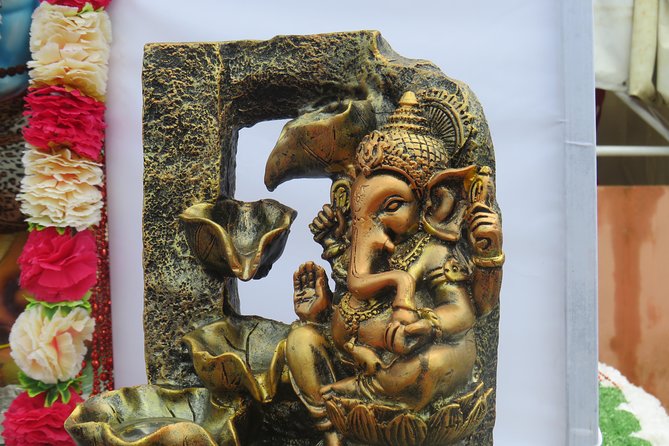
- why Ganesh’s right defense is broken
Those details might sound strange if you only see them once in a photo. With a guide, they become part of a larger explanation about how meaning is encoded in the body of stories and in temple practice.
If you want extra value, plan around festival dates
The tour notes that it can propose to attend and follow the processions or prayers on specific festival dates. That means the experience can feel even more “live” when your visit lines up with the calendar.
If you’re flexible, checking festival timing can turn a good tour into the kind that sticks with you. If your dates are fixed, you can still get a lot from the explanations, but the atmosphere may be calmer.
How Mauritian history and slavery show up in modern faith
This is a respectful tour, but it doesn’t pretend culture exists in a vacuum. The overview frames the temples through Mauritian history, including slavery and the commitment to the present day.
You can think of this as the tour’s background soundtrack. You’re walking through places of worship, but the guide is also pointing out how Indian spiritual traditions survived, changed, and continued under changing social realities. That context is part of why festivals matter, not only as religious events but also as markers of identity in Mauritian society.
What you gain as a visitor
You’ll likely leave with fewer “separate categories” in your head. Temple practice stops being just a foreign spectacle. It becomes a living part of Mauritian life, tied to community memory and ongoing commitment.
Just keep your expectations realistic. The tour is only about 3 hours, so the history is meant to provide perspective, not replace a full documentary.
Private tour value: why about $64.61 feels fair
The price is listed at $64.61 per person. That sounds simple, but the value comes from how the tour is built.
First, it’s private, meaning your group gets the guide’s focus rather than sharing attention with strangers. Second, you’re visiting three major sites with free admission noted at each stop. Third, the time is tight, so you’re not paying for a long day of mostly waiting around.
In plain terms, you’re paying for explanation: the stories behind Shiva, Ganesh, lingam ritual meaning, and Tamil temple myths, plus how those connect to Mauritian history and today’s festivals.
If you enjoy guided interpretation and you want a framework to understand what you see, this price can feel like a bargain. If you prefer self-guided temple wandering with minimal talking, you might not use your time as efficiently.
Who should book this, and who should think twice
This tour fits best if you like culture with questions, not culture with only captions. You’ll probably enjoy it most if you’re curious about why rituals and statues look the way they do, and you want a clear, respectful explanation of Indian spirituality in Mauritius.
It also works well for:
- first-time visitors who want a concentrated route
- people who like short tours with strong guidance
- travelers who care about how diaspora communities keep traditions alive
You might think twice if:
- you want a long, relaxed pace with lots of free time at each stop
- you are not interested in festival context or symbolic explanations
- weather-dependent scheduling would stress you out
Should you book this route of Indian spirituality?
I’d book it if you want meaningful context fast. Three temples, free admission at each, and a guide who is praised for thorough, insightful explanations is a solid mix for a short morning outing.
I would skip or at least reconsider if you’re mainly after photo time and quiet wandering. This is a guided story route, and the structure is designed for learning, not drifting.
If you’re the type who likes asking why, why, why, this tour is exactly the right kind of “short and powerful” experience.
FAQ
Where does the tour start?
The tour starts at La Croisette MU, Chem. Vingt Pieds, Grand Baie 30517, Mauritius.
What time does the tour begin?
The start time is 9:00 am.
How long is the experience?
It lasts about 3 hours.
How much does it cost?
The price is $64.61 per person.
Is this a private tour or shared group?
This is a private tour/activity. Only your group will participate.
Is the ticket mobile?
Yes, it’s a mobile ticket.
Are admission fees included for the temples?
Admission is listed as free for each stop.
What if it rains or I need to cancel?
The experience requires good weather. If it’s canceled due to poor weather, you’ll be offered a different date or a full refund. You can cancel up to 24 hours in advance for a full refund.
The Full Mauritius Review Pile
Fresh from our Mauritius review notebook
- Mauritius Private South West Tour
★ 5.0 · 3 reviews - 1 way Airport transfer
★ 4.0 · 3 reviews - Southern Mauritius: Volcanoes & Coloured Earth
★ 5.0 · 3 reviews - Port Louis: City Tour with Street Food Tasting
★ 5.0 · 3 reviews - North Tour Of Mauritius With Street Food tasting
★ 5.0 · 3 reviews - Insta-Worthy City Tour: Unveil Picture-Perfect Spots
★ 5.0 · 3 reviews