
REVIEW · CHAMAREL & THE SEVEN-COLOURED EARTH
Ebony Forest Reserve Chamarel: Endemic Birdwatching Guided Tour
Ebony forest hides birds you will not expect. I love the small group feel and the fact you start with binoculars and guidance, which turns spotting into a skill, not just luck. The one thing to plan for is the moderate walking, because this is a real half-day outdoors activity.
This tour is built around Mauritius’ endemics, especially birds linked to the Ebony Forest Reserve Chamarel. You’ll begin with a brief museum visit, then head to areas where you can observe birds in a more guided way before moving deeper into the forest.
Timing is straightforward, with a daily morning start at 9:00 am, and the whole experience runs about 3 to 4 hours before returning to the same meeting point. The goal is not a giant species list, it is focused birding in one Important Bird Area that still has hope for these threatened birds.
In This Review
- Key Highlights You Should Care About
- Why Ebony Forest Reserve Chamarel is a top birdwatching stop
- Price, Snacks, and Binoculars: Is $60 a good deal?
- 9:00 AM flow: museum, release aviaries, and raised walkway time
- Echo Parakeet and Pink Pigeon: your first birding wins
- Ebony forest restoration, canopy boardwalks, and your jeep choice
- Sublime Point snack stop, plus mountains talk for birders
- How many endemics will you see in 3 to 4 hours?
- Binoculars, pace, and how to scan the canopy efficiently
- Who should book this Ebony Forest birdwatching tour?
- Should you book Ebony Forest Reserve Chamarel? (My take)
- FAQ
- How long is the Ebony Forest Reserve Chamarel birdwatching tour?
- What time does the tour start, and where does it meet?
- What’s included, and what should I bring?
- How big is the group?
- Is there walking involved, or can I use safari jeeps?
- What happens if weather is poor or I need to cancel?
Key Highlights You Should Care About

- Small-group birding (max 9) means less crowd pressure and more time with your guide
- Provided binoculars plus expert direction helps you find motion, calls, and feeding behavior
- Bird release aviaries early on give you a strong start with Echo Parakeet and Pink Pigeon chances
- Raised walkway and canopy viewing can put your eyes where the birds actually work
- Snacks and drinks at Sublime Point keep the energy up during the outdoor stretch
- Walk or jeep option lets you match the route to your comfort level
More of Chamarel, the earth, the rum and the waterfall



Why Ebony Forest Reserve Chamarel is a top birdwatching stop

Ebony Forest Reserve Chamarel is the kind of place that rewards patience. In Mauritius, where many birds evolved in isolation, the Ebony forest is one of the rare settings where you can still hope to see multiple endemic species in a single morning. The reserve is described as an Important Bird Area by BirdLife International, which is a big clue that conservation is not just branding here.
What I like about this format is that it is not only about “spot the rare bird.” You also get a sense of what makes the habitat different. The Ebony Forest restoration effort is part of the story, including rebuilding larger areas of native forest. That matters because a bird tour like this only works well when the forest structure, food sources, and cover are returning.
You’ll also be in a guided environment where your attention is trained. Your guide shows you how to find birds, where to look in the canopy, and what to listen for while birds are active and feeding in the wild. That guidance is crucial, because these species can be quiet, high up, or just hard to track without local cues.
Price, Snacks, and Binoculars: Is $60 a good deal?
At $60.58 per person for roughly 3 to 4 hours, the price feels reasonable because the tour includes the items that usually add up on your own. You get binoculars, plus snacks and drink to keep you going for the outdoor part of the morning. Those inclusions remove two common annoyances: having to rent gear and feeling hungry before you even hit the best birding time.
This is also a small-group experience with a maximum of 9 travelers. Smaller groups typically mean your guide can spend more time focusing on you and other people in the group, rather than managing crowd movement. When you are trying to spot small or shy birds, that extra attention is not a luxury, it is part of what improves your odds.
The main “cost” to consider is effort. You should be ready for a walk with a moderate fitness level. If you want a totally sit-and-go tour, this is not that. But if you enjoy moving slowly through forest edges and boardwalks while listening and scanning, the value makes sense.
9:00 AM flow: museum, release aviaries, and raised walkway time
The tour starts at 9:00 am at the Ebony Forest Reserve Chamarel meeting point, and it ends back at the same place. That simple loop is helpful if you want a clean plan for the rest of your day in Mauritius.
Your morning has a few distinct phases:
First, there is a brief museum visit. Think of this as your quick primer. It helps you know what you are looking for, and it sets the tone for birding in this reserve, where the key is learning how birds behave in the canopy rather than just scanning randomly.
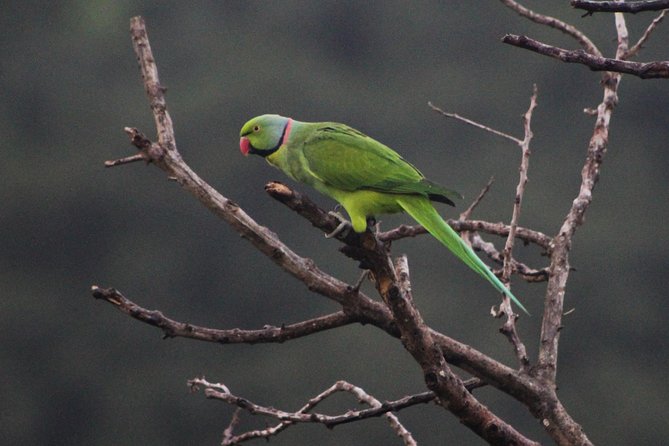
Next comes the exclusive visit of the bird release aviaries. This is where your guide helps you find the Echo Parakeet and Pink Pigeon, including a chance to spot them as they move and feed in more controlled settings connected to the conservation work.
Then you move outdoors toward the Flycatcher Raised Walkway and onward to Sublime Point. You can walk or use the safari jeeps for this part, which is useful if you want to save energy for the canopy viewing areas.
Finally, you enjoy snacks and drinks at Sublime Point while your guide talks through the mountains and rugged scenery of the wild south. The tour finishes where it began, so you are not left figuring out transport logistics after you are tired.
Echo Parakeet and Pink Pigeon: your first birding wins
If these names are on your must-see list, the order of operations is a big deal. You don’t start deep in the forest and then hope. You start with orientation, then you get an early look at the birds linked to the reserve’s conservation work.
The bird release aviaries are specifically part of what you do at the start. That means you are more likely to get visual confirmation of target species early, including Echo Parakeet and Pink Pigeon. Even if you are an experienced birdwatcher, this is a smart way to begin. You can learn what the birds look like at eye level, what their movement patterns are like, and what your guide’s spotting cues sound like.
Your guide also spends time on how Ebony Forest is saving endemic birds. You’ll likely see that the goal is not only present-day observation, it is supporting the survival of these species over the long term through restoration and habitat work.
One practical tip: keep your binoculars handy from the moment you enter the aviary area. In birding, the best moments are often short. Having your gear already positioned helps you react fast when a bird shifts position or starts feeding.
Days where someone local does the explaining
- Mauritius: Tamarind Falls Guided Hike with Swim and Lunch★ 4.8 · 105 reviews
- Afternoon Guided Kayak Tour on the Tamarin River★ 5.0 · 93 reviews
- 2 Hours Guided Quad Bike Tour in Bel Ombre Nature Reserve★ 5.0 · 92 reviews
- Mauritius: Le Morne Mountain Guided Sunrise Hike and Climb★ 4.8 · 72 reviews
- Guided Kayak 2-Hour Activity with Dolphins★ 5.0 · 57 reviews
Ebony forest restoration, canopy boardwalks, and your jeep choice
This is where the tour becomes more than a checklist. You’ll walk or take safari jeeps to reach the Flycatcher Raised Walkway and Sublime Point, and the raised structure is a major advantage for birding.
One strong piece of advice from real-world expectations is to plan for meaningful walking. In practice, it can add up to about 6 km. That may sound fine on paper, but the route includes parts designed for bird watchers, with boardwalk sections that take you higher into the canopy. If you like birding from above the understory, you will probably appreciate the effort.
You can also use the jeeps, but you should consider using them only if you need the break. There is a helpful trend in how people recommend doing this: if you feel comfortable, walking both ways lets you enjoy the full birding route, including those high-up viewing sections and the small resting points built into the experience.
Either way, the message is consistent. This is a forest you experience through movement, pauses, and careful scanning. Restoration efforts also play into the viewing, because rebuilding native forest structure is what supports the birds that are tied to this ecosystem.
Sublime Point snack stop, plus mountains talk for birders
At Sublime Point, you get a break that is more useful than it sounds. Birding can turn into a long session of standing still and scanning, which is tiring in a different way than regular hiking. Snacks and drinks here help you keep focus and avoid the crash that can make the last part of birding feel slow.
Your guide also highlights the mountains and rugged scenery of the wild south. Even if your brain is locked on birds, this narration helps connect the habitat to the bigger picture. When you understand where you are, you scan more intelligently. You may also find you notice wind direction, canopy openings, and light changes, all of which affect bird activity.
The stop is also a good moment to ask practical questions. If you have already seen some species, ask what the guide expects next. If you haven’t, ask what signs matter most, like call patterns or feeding behavior. This is where the guided format earns its keep.
How many endemics will you see in 3 to 4 hours?
Here is the honest part: a short morning is not a guarantee. The tour covers major areas and you have guide support, but birds are still wild animals with their own schedules.
You can target a set of endemic birds named for this experience, including:
- Pink Pigeon
- Echo Parakeet
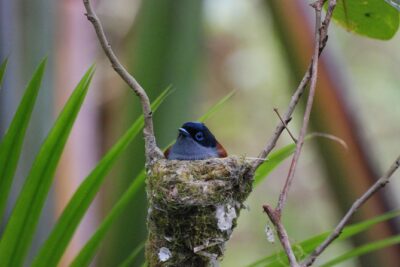
- Mauritius Paradise Flycatcher
- Mauritius Black Bulbul (also called the merle)
- Mauritius Kestrel
- Grey-white eye
The realistic mindset is to expect a handful rather than a huge list. A very practical expectation is that during a 4-hour walk you might see one or two species, and sometimes more if conditions line up. Some birders also manage to spot several endemics in a single outing, so if you have high hopes, stay hopeful, just don’t tie your enjoyment to a specific count.
Also note that this tour includes early aviary viewing plus later forest areas. That structure generally gives you better odds than a purely wild-only approach, because it reduces the time you spend searching blindly for the first target species.
Binoculars, pace, and how to scan the canopy efficiently
This tour’s biggest advantage is that you are not doing birding on hard mode. You are given binoculars and you learn how to use them with a guide.
Use a steady rhythm. Stop briefly, scan slowly, then move a step and rescan. If you rush, you’ll miss motion. If you freeze too long, you’ll lose birds that shift position.
When your guide points something out, try to locate it with your eyes first, then confirm with binoculars. That habit reduces the time you spend hunting in the view. It also helps you notice where birds are feeding versus where they are just passing through.
From what you can expect in the guide’s approach, plan for more than bird names. Your guide will explain aspects of the forest, including what to look for in plants and other wildlife like butterflies, not only birds. That kind of side knowledge helps you stay engaged during quiet stretches, and it also improves your spotting because you start recognizing habitat cues.
If you have the option, keep your camera ready, even though a camera is not included. You will probably want to record the moments when a bird is active and feeding, because those are the times you will have the best shot at a clear look.
Who should book this Ebony Forest birdwatching tour?
This is a great fit if you:
- Want an endemics-focused morning in Mauritius
- Prefer small groups and guided help finding birds
- Enjoy walking through forest settings with boardwalk sections
- Like the idea of pairing conservation education with real wildlife time
It is also a solid choice if you’re new to birdwatching, because the tour is designed to show you how to spot birds rather than expecting you to already know what to look for.
You might want to reconsider if you have mobility limits, since the tour requires a moderate physical fitness level and involves walking time. The good news is you can use safari jeeps for parts of the route, which gives you flexibility. But it is still an outdoors, moving tour.
Finally, it helps to be comfortable with the reality of wildlife viewing. Birds can be elusive, and your enjoyment will be tied to how you approach the hunt, slow down, and stay curious.
Should you book Ebony Forest Reserve Chamarel? (My take)
Yes, you should book it if seeing Mauritius endemics is a priority and you want a guided experience that improves your chances without turning it into a stressful scramble.
For the value, I like that binoculars and snacks and drinks are included, and that the group stays small at a maximum of 9. That combination makes it feel practical, not just expensive. The itinerary also makes sense: museum orientation first, bird release aviaries early, then raised walkway and Sublime Point for the outdoors stretch.
The only main reason to hesitate is expectation management. You are in wild habitat with birds that may or may not cooperate on a given morning. Build your plans around the experience itself, not a fixed species number.
If the weather is good and you are ready for a moderate walk, this is one of the more meaningful half-day wildlife options in Mauritius.
FAQ
How long is the Ebony Forest Reserve Chamarel birdwatching tour?
It runs about 4 hours, though the experience can be described as around 3 to 4 hours total.
What time does the tour start, and where does it meet?
It starts at 9:00 am at the Ebony Forest Reserve Chamarel in Chamarel MU, 90409, Mauritius. The tour ends back at the same meeting point.
What’s included, and what should I bring?
Included are snacks and drink, and binoculars. A camera is not included, so you should bring your own if you want photos.
How big is the group?
This activity has a maximum of 9 travelers.
Is there walking involved, or can I use safari jeeps?
There is a moderate physical fitness level expected. You can walk or use safari jeeps to visit the Flycatcher Raised Walkway and Sublime Point.
What happens if weather is poor or I need to cancel?
The tour requires good weather. If it is canceled due to poor weather, you will be offered a different date or a full refund. You can cancel up to 24 hours in advance for a full refund.
More Island Outings We Reviewed




The Full Mauritius Review Pile




Chamarel Beyond the Coloured Earth
Fresh from our Mauritius review notebook
- Mauritius: Watersport Adventure Day with Lunch and Pickup
★ 3.9 · 3 reviews - The Tea Story with Lunch
★ 3.5 · 3 reviews - SouthEast Lagoon Discovery on shared basis on a Power Catamaran
★ 5.0 · 3 reviews - Shared 10 Pax Boat Tour: Dolphin Watching, Snorkelling and BBQ
★ 5.0 · 3 reviews - Mauritius Guided Sunrise Kayak Tour on the Tamarin River
★ 5.0 · 3 reviews - Mauritius Guided Kayak Experience to Benitiers Island
★ 5.0 · 3 reviews
Chamarel & the Seven-Coloured Earth, compared.
 ★ 4.8Private Southwest Chamarel Highlights TourFrom $1271,427 reviews
 ★ 4.6Chamarel 7 Colours & Waterfalls, South-West TourFrom $125287 reviews
 ★ 4.5Riambel: South Tour w/ Crocodile Park & Seven Colored EarthFrom $130204 reviews
 ★ 5.0Ebony Forest Reserve Chamarel – Take a Hike TourFrom $10103 reviews
 ★ 4.5Entrance Ticket To Curious Corner of ChamarelFrom $1196 reviews
 ★ 4.8Chamarel: Southwest Mauritius Private Guided Day TourFrom $17578 reviews
 ★ 4.5Southern Tales: Full-day incl Crocodile Park & 23 Colored EarthFrom $14174 reviews
 ★ 4.0Picturesque South Tour Of Mauritius, Incl Lunch,7-Coloured EarthFrom $10366 reviews
Browse the lists this tour appears in